


During the month of March the Institute of Philosophy received Dr George Gasser, from the University of Innsbruck, thanks to the Oxford Templeton Visiting Fellowships given by the “The Science, Philosophy and Theology in Latin America” project of the Ian Ramsey Center for Science and Religion (University of Oxford), financed by the John Templeton Foundation. Dr Gasser specializes in contemporary theories of action and personal identity, in the free will problem, and in topics of philosophy of religion.
 Two main activities took place during Dr Gasser's visit: a seminar of the Humanistic Studies Program and a workshop for researchers. About fifteen scholars from the University and some visitors attended from March 13th to 15th to the seminar “Personal identity and theory of action”. This seminar consisted of a deep discussion of the main positions in the current debate on the problem of personal identity (the biological, psychological and narrative conceptions of personal identity) and their relationship with the problem of agency. On Thursday 16th Dr Gasser was in charge of the meeting of the monthly seminar “Person, Mind & Brain”, entitled “Robust Minimal Agents”.
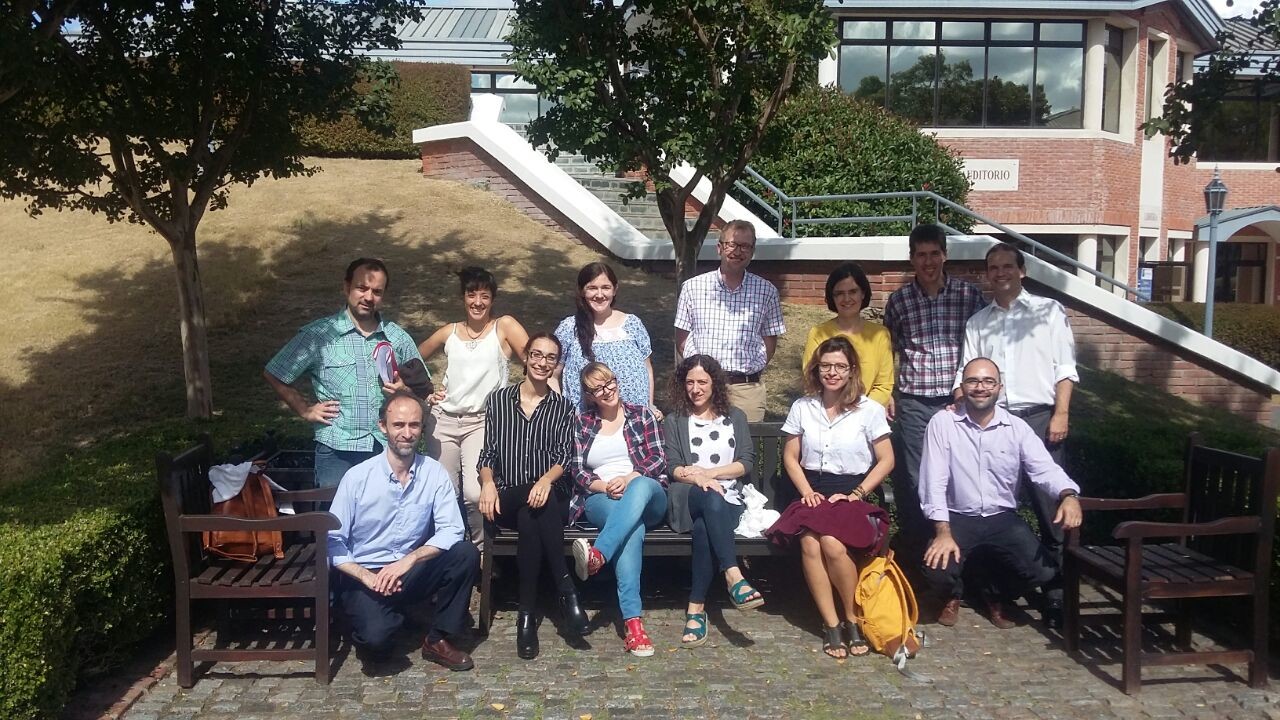 On Monday 27th and Tuesday 28th took place the Interdisciplinary Research Workshop “Personal Identity and Agency”, coordinated by Juan F. Franck, host of the visit. The workshop began with an open class on “The neural bases of agency”, by Dr Ángela Suburo (Universidad Austral) and another one on “Philosophy of agency”, by Dr Gasser. The aim of this workshop was the discussion of research papers with intentions of publication in different academic journals. Researchers from Córdoba, Bahía Blanca, Bariloche, Mendoza and Buenos Aires, and also from Uruguay, Brazil, and Peru attended.
On the last week of his visit, Dr Gasser gave an interview that will be soon available on the University's Youtube channel, with subtitles in Spanish. He also had a meeting with professors and advanced students of Psychology and Philosophy of the Universidad Católica Argentina, with the aim to achieve an interdisciplinary and integral conception of the human person.


