
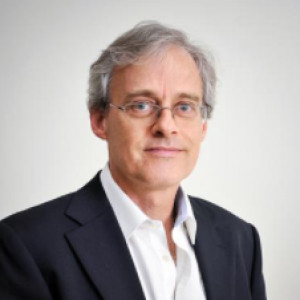
Héctor Rocha (Ph.D London Business School, UK; Master in Government and Culture of Organizations, University of Navarra, Spain) is a professor at IAE Business School for 25 years. Currently leads three initiatives in which cooperation is the key process for comprehensive sustainable development: the Chair of Comprehensive Sustainable Development, IAE Business School; the international seminar IAE – London Business School: How to Co-Create Value in Turbulent Environments; and the international forum and program IAE-IESE Cities in Motion: Competitive Districts and Integrated Cities.
Transforming business realities for comprehensive human, organizational, and social development is the essence of her professional vocation. Her research on the impact of clusters on the development of companies and regions in Latin America has been recognized by the European Union, winning the Emerald-CLADEA Award for its contribution to knowledge with social impact and the Emerald Literi Network Award for Excellence. Her four books on Corporate Social Responsibility and Comprehensive Development , Entrepreneurship , Sustainable Comprehensive Development , and the impact of clusters on regional development systematize this knowledge and experience. Her academic work has been published in journals such as the Journal of Management Studies and the Journal of Business Ethics, among others (see the list of papers and books on ResearchGate and Google Scholar ).
He shared this knowledge and experience with internationally recognized colleagues, with whom he carries out intensive collaborative work (see below: A Collaborative Intellectual Journey ). The results of this research on clusters, entrepreneurship, regional and urban development, and the purpose of companies have been presented at seminars, conferences, and symposia in the United States, five Latin American countries, and ten European countries, including academic institutions such as IESE Business School , Warwick Business School, ISM (Lithuania), Hanover University, London Business School , Stanford Business School , and the University of San Diego (the latter three during their visits to Buenos Aires). He has also presented his research at international institutions such as the United Nations (UNCTAD plenary session 2004, AOM – UN Global Compact Forum on Business and Development, 2006), IADB (SME Development, 1998), OECD (2012), Strategic Management Society (1998–present), and the Academy of Management (2002–present).
This collaborative work is carried out with executives from national and international companies, governments, and third-sector organizations. His experience includes working with the Techint Group, the Buenos Aires Provincial Government, and the international consulting division of Price Waterhouse before joining the... IAE They were the starting point. Then came advising executives, entrepreneurs, and public officials on issues of sustainable comprehensive development, triple bottom line, the mission of companies (interview with Jay Cohen), regional and city development, and public-private cooperation for development are your main sources of learning and contribution.
Finally, working with third-sector organizations such as the Argentine Food Bank Network (a founding member of the Global Food Banks Network) and Children's Villages (a member of KDI International) is another source of contribution and enrichment.
Hector is married to Maria Ines, with whom he dedicates his family time to learning, educating and enjoying their children Esteban, Efrain, Ignacio, Jose, Tobias, Miguel, Maria Lourdes, Maria Sofia, Maria Pilar and Maria Teresa.
A Collaborative Intellectual Journey based on explicit assumptions about the purpose of people, organizations, and society.
The first article was co-authored with Sumantra Ghoshal and focused on the personal level of analysis ( Beyond Self_Interest_2006 ). Then, together with Janine Nahapiet and Lynda Gratton, they applied the same assumptions at the organizational level to explain human relations based on cooperation ( When Cooperation is the Norm ). The next step was to move to the inter-organizational level, where, together with Raymond Miles, they developed a paper outlining the main assumptions for fostering cooperation between organizations ( Collaborative_Entrepreneurship_for_a_More_Humanistic_Management ). Finally, Héctor has contributed an article on Integral Sustainable Development, in which he revisits the main development paradigms ( Dominant_Development_Paradigms ). He has also written an article in memory of Sumantra Ghoshal as a Force for Good ( Management Theory and Practice as a Force for Good ).
These assumptions at the personal, organizational, inter-organizational and social levels have been applied to the phenomena of entrepreneurship and clusters or ecosystems for economic development with social cohesion, together with the most prestigious international researchers on these topics, such as David Audretsch (Indiana U.), Julian Birkinshaw (London Business School), Pascual Berrone (IESE Business School), and Phil Phan (John Hopkins U.).
Currently, Hector and his colleagues are writing about the intrinsic alignment between personal values, organizational purpose, and the common good ( People_Firms_and_Society ) and how business schools embracing a more Athenian model of liberal arts education could contribute to better citizens and better businesses for society ( Business Schools at Crossroads_Sparta&Athens ). Finally, along with international academics developing new theories and approaches such as Roy Suddaby (University of Victoria) and Michael Pirson (Fordham University), he is interviewing entrepreneurs and leaders of emerging phenomena such as B Corporations, Conscious Capitalism, Imperative21, Blueprint for Better Business, and the Economy of the Common Good, which challenge mainstream assumptions in management. In particular, the assumptions about the purpose of people, entrepreneurs and businesspeople, the purpose of businesses and business schools, and the key processes to achieve it in different socio-economic systems ( Business with Purpose and the Purpose of Business Schools: Re-Imaging Capitalism ).
LINKS OF INTEREST
1. Linkedin
https://www.linkedin.com/in/hectorrocha10/?originalSubdomain=ar
2. Chair of Sustainable Comprehensive Development https://www.iae.edu.ar/es/ConocimientoEImpacto/Catedras/DIS/Paginas/default.aspx
3. International Seminar IAE – London Business School: How to Co-Create Value in Turbulent Environments
4. International Forum and Program IAE-IESE Cities in Motion – Competitive Districts and Integrated Cities https://www.iae.edu.ar/es/Programas/internacionales/Paginas/Cities-in-Motion.aspx
5. Page IAE
https://www.iae.edu.ar/es/Comunidad/Profesores/Paginas/Hector-Rocha.aspx
6. Investigations
https://www.researchgate.net/profile/Hector-Rocha-3
https://scholar.google.com/citations?user=JCI2E-sAAAAJ&hl=es
7. Live cases
https://riu.austral.edu.ar/search?rpp=10&etal=0&scope=&query=HECOR+ROCHA&page=2&sort_by=0&order=DESC
8. Webinars and videos
 Associate Researcher